


Château d'If
Castles · Palaces · Manor Houses
Produced by :  © 2016
The Château d’If, a photogenic island fortress at the gates of Marseille, guards the entrance to the Old Port and connects world literature with historical reality like almost no other place.
Made famous by Alexandre Dumas' classic "The Count of Monte Cristo" (1844), the fortified walls rise from the deep blue Mediterranean. Where fiction meets history, the massive stones tell of lifelong imprisonment and those legendary escape plans that continue to spark the imagination of visitors from all over the world.
Behind the literary legend lies a grim historical reality: for centuries, the Château d’If served as a dungeon for numerous political prisoners, including the revolutionary hero Mirabeau and the Communards of 1871. Even if the island itself appears barren and forbidding, the crossing is worth it for the spectacular view of Marseille's Vieux Port alone.
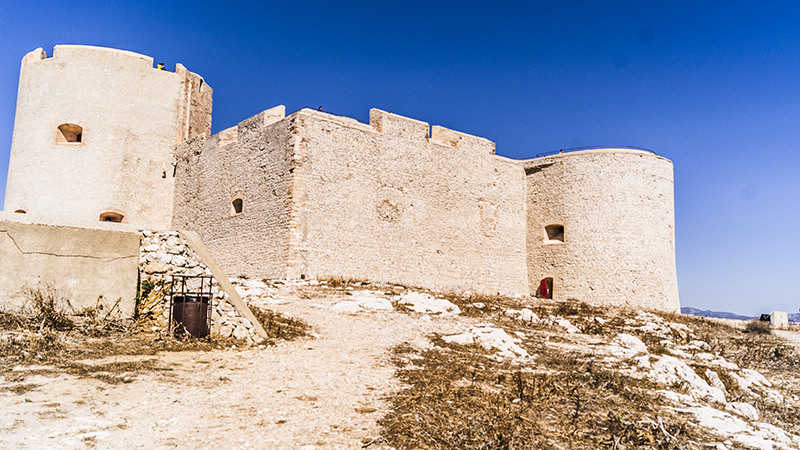
Conceived as a key strategic fortress, Francis I assigned the facility a triple purpose: protecting the coast from invasion, providing cover for the royal galley fleet, and monitoring Marseille. From 1580, the fortress eventually evolved into a notorious state prison, where primarily Protestants and Republicans were held under harsh conditions.

In recent years, the area has been extensively refurbished. Nevertheless, a personal conclusion remains: while the work on the exterior was still in its early stages, the atmosphere inside was already oppressively authentic. The frustration of the Count of Monte Cristo becomes palpable when you see Marseille's old town sparkling in the golden evening light through the narrow windows – so close and yet unreachable.