


Produced by:  © 2026
In the narrow streets of Bayonne, every wall breathes history—and nowhere does it smell as tempting as at the city's traditional ham producers.
We visit Pierre Ibaïalde directly at his shop. For him, quality and uncompromising adherence to the ancient traditions of his craft are not hollow phrases, but the foundation of his daily work. Pierre takes us on a short journey of discovery into the world of authentic Bayonne ham—a sensory experience shaped by a love for the product and artisanal care.

Ham production in Bayonne is much more than just a craft—it is an art form. *Jambon de Bayonne* has long since become a symbol of Basque gastronomy. It comes exclusively from locally bred pigs and owes its name to the historic port city. The strict production process, refined over generations, has made it famous far beyond the borders of France.
But what truly distinguishes this exceptional product? It is the perfect mastery of the curing process and experience in handling high-quality raw materials. Each ham is carefully salted and then matures over many months to develop its characteristic flavor and melting texture.
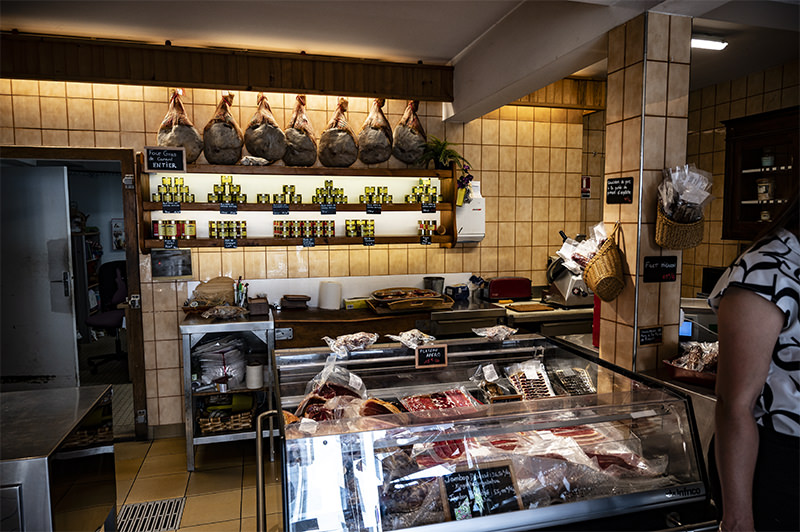
Curing is the decisive step. Unlike other methods, salt plays the leading role here, not smoke. Pierre uses the famous salt from Salies-de-Béarn, valued for its extraordinary purity and preserving properties.
During maturation, Pierre utilizes the unique climatic conditions of the Pyrenees. The alternation between dry air and moist winds ensures uniform drying deep into the heart of the ham. This prevents the formation of a hard crust and guarantees a quality product that reflects the soul of the Basque Country.
"Our doors are open to everyone who wants to understand and appreciate the complexity of processing pork into delicious charcuterie," Pierre tells us during our visit to the historic Petit Bayonne district.

The tips-4-trips travel guide is the digital information brand in the portfolio of TV im Web GmbH.
This comprehensive travel guide to the most beautiful destinations in Western Europe draws on a tradition of documentary filmmaking spanning more than 30 years, whilst the online portal itself celebrated its 20th anniversary in 2025.
t4t is available in English, French and German and offers detailed, first-hand content designed to inspire travellers from all over the world. Every aspect is covered, from city breaks to campsites, from villages to golf and wellness resorts, from sights to cultural events, and there are also unusual stories, as well as those for adventurous travellers.
The portal is continuously updated and welcomes an average of 5 million users per month.